
WELCOME BONUS 300%
UP TO €2000 + 100
FREE SPINS
UP TO €2000 + 100
FREE SPINS
Home → Blackjack
Blackjack at Playamo-Casinos: Variants, Rules and Payouts
Which table limits suit 20 EUR balance?
For a 20 EUR balance, table limits start as low as 1 EUR per hand, as seen with Evolution's Lightning Blackjack and Playtech's Quantum Blackjack Plus Live. This allows for a significant number of rounds, potentially 20 hands at the minimum stake. Therefore, players with smaller bankrolls can engage with these live dealer games for an extended period.
The maximum bet on Infinite Blackjack, Quantum Blackjack Plus Live, and Lightning Blackjack is 5,000 EUR, while the minimum is 1 EUR. This extensive range caters to a broad spectrum of players, from casual entrants to high rollers. A 20 EUR balance would thus be significantly impacted by even a few hands at higher stakes.
While a 20 EUR balance is suitable for the 1 EUR minimums, it is not conducive to reaching the 5,000 EUR maximum bet limit. Players aiming for such high stakes would require a substantially larger bankroll to sustain even a single hand. This demonstrates the tiered accessibility across different player profiles.
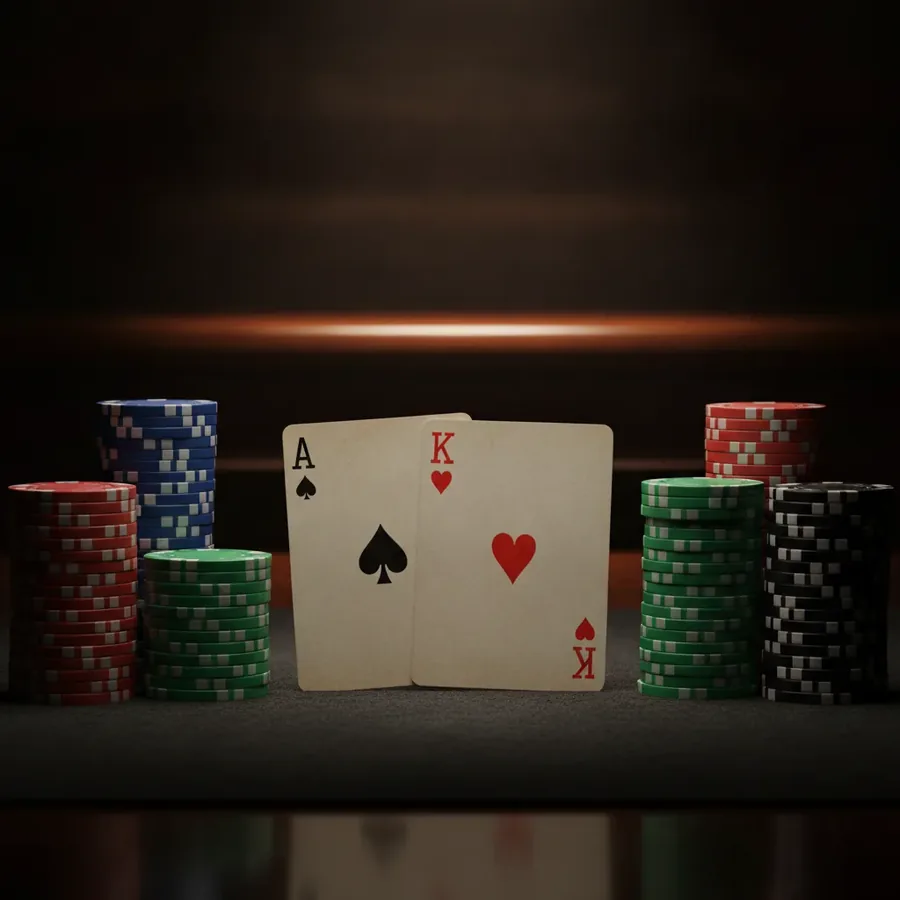
Which rule variants does the software show?
Software-driven Blackjack variations include 'Blackjack Ein Deck' with classic rules, offering an RTP of 99.85% and a house edge of 0.15%. This variant benefits from fewer decks, reducing the house advantage by approximately 0.48 percentage points compared to eight decks. The payout for a natural blackjack is 3:2.
Another variant, 'Blackjack Auszahlung 6:5 statt 3:2 (6 Decks)', presents a significantly higher house edge of 1.85% due to the reduced payout for a blackjack. This change adds 1.39 percentage points to the casino's advantage, meaning a 10 EUR bet on a blackjack would yield only 12 EUR instead of 15 EUR.
The 'Blackjack Surrender (Late Surrender)' rule allows players to forfeit half their bet after the dealer checks for a blackjack, improving the RTP by approximately 0.08 percentage points. While Early Surrender offers greater benefits (up to 0.6 percentage points), it is exceptionally rare in software implementations.
Which hands are excluded from Surrender?
The 'Blackjack Surrender' rule, specifically Late Surrender, involves a player's decision to forfeit half their stake. This option becomes available after the dealer has checked their hand for a blackjack. The inclusion of this rule modifies the game's RTP, typically increasing it by around 0.08 percentage points.
Late Surrender is differentiated from Early Surrender, with the latter being considerably more advantageous to the player, potentially reducing the house edge by up to 0.6 percentage points. However, Early Surrender is an exceedingly uncommon rule variant found in most software implementations.
The concept of Surrender itself is a strategic option available to players under specific circumstances. While the exact conditions for its application in every single software variant are not exhaustively detailed, the core mechanic involves sacrificing a portion of the bet to mitigate losses on a weak hand.
Live stream with three cameras and OCR
Live dealer Blackjack titles such as Evolution's Lightning Blackjack and Playtech's Quantum Blackjack Plus Live feature advanced streaming technology. These games utilize multiple camera angles, often three, to provide an immersive view of the action. Optical Character Recognition (OCR) technology is employed to accurately read card values and game states.
Infinite Blackjack, also from Evolution, offers an unlimited number of seats at the table, enhancing player accessibility. The game incorporates four side bets: Any Pair, 21+3, Hot 3, and Bust It, each with distinct payout structures and house edges. This variety adds further betting dimensions beyond standard blackjack.
The RTP for Lightning Blackjack is 99.56%, for Quantum Blackjack Plus Live it is 99.57% (with optimal strategy), and for Infinite Blackjack it is 99.47%. These figures represent the theoretical return to player over the long term, highlighting the efficiency of these live dealer games.
Highroller from 500 EUR per hand
For high-stakes players, certain live Blackjack tables accommodate bets starting from 500 EUR per hand. Playtech's Quantum Blackjack Plus Live allows wagers up to 5,000 EUR, representing the upper limit for this category of players. This tier of betting is also supported by Evolution's Infinite Blackjack.
The maximum bet limit of 5,000 EUR on tables like Quantum Blackjack Plus Live and Infinite Blackjack is substantial. This allows for significant financial engagement per round, catering to players who are comfortable with larger risk profiles and seek higher potential returns on their wagers.
While specific tables are designated for high rollers, the 500 EUR minimum bet signifies a threshold for accessing these premium gaming environments. Players operating at this level are typically seeking the thrill and potential rewards associated with substantial per-hand investment in live Blackjack.
Blackjack variants at a glance
| Variant | Payout | House edge | Rule | Bet range |
|---|---|---|---|---|
| Blackjack Ein Deck, klassische Regeln, 3:2 | 99.85% | 0.15% | Weniger Decks = niedrigerer Vorteil; ein Deck gibt ca. −0.48 Prozentpunkte gegenüber 8 Decks. Oft durch 6:5 Auszahlung kompensiert. | Blackjack 3:2, Gewinn 1:1 |
| Blackjack 6 Decks, S17, DAS, DOA, Auszahlung 3:2, Basisstrategie | 99.54% | 0.46% | Dealer steht auf Soft 17; Verdopplung auf jeder Zweierkarte; Verdopplung nach Split erlaubt; keine Aufgabe. Basisstrategie ist für diesen Wert zwingend | Blackjack 3:2, normaler Gewinn 1:1, Insurance 2:1 |
| Blackjack Split / Double / H17 – Regel-Effekte | n.a. (Regel-Modifikatoren) | H17 +0.22 Prozentpunkte; RSA −0.08 Prozentpunkte; DAS −0.14 Prozentpunkte | Dealer Hits Soft 17 verschlechtert RTP um 0.22 Prozentpunkte; Resplit Aces verbessert um 0.08 Prozentpunkte; Double After Split verbessert um ca. 0.14 Prozentpunkte; 6 Decks statt 8 – ca. 0.02 Prozentpunkte. | Double – Einsatz ×2 mit einer Karte; Split – bis 4 Hände; Ass-Split meist mit einer Karte. |
| Blackjack Insurance / Versicherung (6–8 Decks) | 92.53% | 7.47% | Separate Nebenwette bis 50% der Hauptwette, wenn der Dealer ein Ass hat. Basisstrategie schreibt IMMER Ablehnung vor (außer Karten zählen bei True Count ≥ +3). Bei einem Deck Vorteil ≈ 5.88% | Insurance 2:1 |
| Blackjack Liberal Vegas Strip (liberale Regeln, 3:2) | 99.72% | 0.28% | Günstigste Regelkombination: S17 + DAS + Resplit + Late Surrender. Standardabweichung 1,15 | Blackjack 3:2, Gewinn 1:1 |
| Blackjack Auszahlung 6:5 statt 3:2 (6 Decks) | 98.15% | 1.85% | Ersatz von 3:2 durch 6:5 fügt exakt +1.39 Prozentpunkte zum Vorteil des Casinos hinzu – stärker als jede andere Regeländerung. Bei $10 Einsatz zahlt Blackjack $12 statt $15. | Blackjack 6:5, Gewinn 1:1 |
Bonus 100 EUR with 10 percent credit
A bonus of 100 EUR is awarded with a 10 percent credit, meaning a deposit of 100 EUR results in a 110 EUR total balance available for play. This structure is applied to the initial deposit. The wagering requirement for this bonus is 40 times the bonus amount. Therefore, to withdraw any winnings derived from the bonus, a player must wager 400 EUR (100 EUR bonus x 40).
The welcome bonus package offers up to 2,000 EUR in bonus funds and 100 free spins. This is a 300% match on deposits. For example, depositing 100 EUR would yield an additional 300 EUR, for a total of 400 EUR to play with, in addition to the base 100 EUR bonus mentioned previously. Free spins are typically allocated over a period of time. Slot games contribute 100% towards the wagering requirements. Table games, including Blackjack variants, contribute only 10%.
A player receiving the 100 EUR bonus would need to complete 4,000 EUR in wagers to meet the playthrough requirement. This assumes the bonus is the sole component being cleared. If the 300% welcome bonus is also active, the total wagering would be significantly higher. For instance, a 100 EUR deposit for the 300% bonus requires 12,000 EUR in wagers (300 EUR bonus x 40). This means that playing slots is the most efficient way to clear bonus funds.
Soft 17: Dealer Hits or Stands
In Blackjack Liberal Vegas Strip, the dealer stands on Soft 17, a rule highly favourable to the player. This specific rule contributes to the game's low house edge of 0.28%. The RTP for this variant is 99.72%. Favourable rules like 'Double After Split' (DAS) and 'Dealer Stands on Soft 17' (S17) are crucial for achieving such high return-to-player percentages.
Blackjack 6 Decks, however, operates with a dealer hitting on Soft 17. This leads to a slightly higher house advantage of 0.46% and an RTP of 99.54%. While still a competitive offering, the distinction in dealer rules impacts the long-term expected return for the player. The rule 'Dealer stands on Soft 17' is a significant factor in optimizing basic strategy play.
The house advantage difference between a dealer standing on Soft 17 versus hitting on Soft 17 is approximately 0.22%. This means that for every 100 EUR wagered on a game where the dealer hits Soft 17, the theoretical return to the player is 0.22% lower compared to a game where the dealer stands. Blackjack Liberal Vegas Strip exemplifies the benefit of the dealer standing on Soft 17.
How long do 100 EUR last at a 1 EUR table?
At a 1 EUR blackjack table, 100 EUR could theoretically last for 100 hands if each hand resulted in a loss of the full bet. However, this scenario is highly improbable due to winning hands and strategic decisions. The average house edge of 0.46% on Blackjack 6 Decks suggests that over a prolonged period, approximately 0.46 EUR of every 100 EUR wagered is retained by the casino.
Considering an average bet of 1 EUR per hand, a player with 100 EUR could anticipate approximately 100-200 hands before their bankroll is significantly depleted, assuming a mix of wins and losses and factoring in the house edge. The RTP of 99.54% for Blackjack 6 Decks indicates that, on average, 99.54 EUR of every 100 EUR wagered is returned to players over an extended duration.
The duration of 100 EUR at a 1 EUR table is heavily influenced by variance and playing strategy. While a direct 100 hands is a simplistic calculation, real gameplay involves fluctuations. If a player consistently wins and employs optimal strategy, their bankroll could extend considerably beyond 100 hands. Conversely, a string of losses, especially with side bets like Insurance, can deplete funds rapidly.
Even Money only possible with Dealer Ace
The 'Even Money' option in blackjack, often referred to as insurance, is exclusively offered when the dealer's upcard is an Ace. This side bet allows a player to wager up to 50% of their original bet. The payout for a successful Even Money bet is 2:1. It functions as a hedge against the dealer achieving a blackjack.
Blackjack Insurance, with an RTP of 92.53% and a house advantage of 7.47%, is a side bet that is almost always advised against by basic strategy. This is because the odds of the dealer having a blackjack when showing an Ace are not favourable enough to warrant the bet. The high house edge makes it a costly option for the player in the long run.
For players who do not employ card counting techniques, the recommendation is to always decline the Insurance bet. Only when the true count reaches +3 or higher does the theoretical advantage shift, making the Insurance bet potentially profitable. In standard play, even with a dealer showing an Ace, the probability of a blackjack is not high enough to justify the 2:1 payout against a 7.47% house edge.
Set session stop after 30 percent loss
Implementing a session stop after a 30 percent loss is a crucial risk management strategy. For a starting bankroll of 100 EUR, this means setting a stop-loss limit at 70 EUR. Once the player's balance reaches or falls below this threshold, they should cease playing for that session, regardless of their current emotional state or perceived chances of recovery.
For a player starting with 100 EUR, a 30% loss equates to a reduction of 30 EUR from their initial bankroll. This would leave them with 70 EUR. Continuing to play beyond this point increases the likelihood of losing the remaining funds entirely, as the house edge remains constant over time. This strategy is independent of game choice, whether it's Blackjack 6 Decks (0.46% house edge) or other variants.
A player utilizing this strategy with a 100 EUR bankroll would stop playing once their balance hits 70 EUR. This prevents further erosion of capital and preserves a portion of the initial funds. For instance, if playing Blackjack Liberal Vegas Strip with its 0.28% house edge, reaching the 70 EUR limit still signifies a substantial loss relative to the starting amount, underscoring the importance of the stop-loss rule.
Surrender vs Playing Out on 16 vs 10
The Blackjack Surrender rule, specifically Late Surrender, offers players the option to forfeit half their bet after the dealer checks for Blackjack. This rule modification improves the Return to Player (RTP) by approximately 0.08 percentage points. The consequence for the player is a reduced potential loss in unfavorable situations, such as holding a hard 16 against a dealer's 10.
In contrast, playing out a hard 16 against a dealer's 10, without surrendering, exposes the player to a higher house edge. Early Surrender, a far rarer variant, can improve RTP by up to 0.6 percentage points.
Therefore, understanding the impact of the surrender option is crucial for players aiming to optimize their gameplay. While not all Blackjack variants at Playamo-Casinos may feature this rule, its inclusion demonstrably benefits the player by reducing the house's long-term advantage. The choice to surrender can significantly alter the overall expected return on investment.
What doesn't count as Blackjack after Split?
In some Blackjack variants, achieving a total of 21 with two cards after a split does not automatically qualify as a Blackjack. This distinction is critical as a non-Blackjack 21 typically pays out at even money (1:1) rather than the standard 3:2 payout for a natural Blackjack. This rule significantly impacts the house edge.
For example, in Blackjack Split/Double/H17 variants, if a player splits Aces and draws a 10-value card on one of the Aces, resulting in 21, this hand is not considered a Blackjack. The rule regarding Double After Split (DAS) can also influence such outcomes, though the primary impact on a non-Blackjack 21 comes from the payout structure.
The consequence for the player is a reduced payout on a seemingly strong hand. While specific RTP figures for these scenarios are not individually detailed, the standard payout for a non-Blackjack 21, often 1:1, is less favorable than the 3:2 payout for a true Blackjack. Players should verify the specific rules of any game they play.
What Percentage Does Blackjack Count Towards Bonus?
When engaging with bonus offers at Playamo-Casinos, not all games contribute equally to wagering requirements. Blackjack games, in general, contribute a significantly lower percentage compared to slot games. Specifically, table games, including Blackjack, contribute only 10% towards the bonus turnover.
This means that for every €100 wagered on Blackjack, only €10 will count towards fulfilling the bonus wagering requirements. In contrast, slot games have a 100% contribution. Therefore, a €100 bet on slots effectively clears €100 of the wagering requirement, making slots a much faster way to unlock bonus funds.
The consequence for players who prefer Blackjack is that it will take considerably longer to meet the wagering terms of any given bonus. For instance, to meet a €1,000 wagering requirement solely through Blackjack, a player would need to wager €10,000. This highlights the importance of checking game contributions before accepting a bonus.
Unlimited seats via a split dealer hand
Certain live Blackjack variants, such as Infinite Blackjack by Evolution, offer an unlimited number of seats to players. This is achieved through a shared initial hand dealt to all players, with subsequent individual decision-making. This innovative approach overcomes the seat limitations often found at traditional tables.
This unlimited seating arrangement is a core feature that enhances player accessibility. Games like Infinite Blackjack are designed to accommodate any number of participants simultaneously, ensuring that players do not have to wait for an available seat. This contrasts with traditional tables which might have a fixed number of players, for instance, 7 seats.
The benefit for players is immediate access to the game regardless of how many other individuals are playing. This design is particularly advantageous during peak gaming times, preventing player frustration due to unavailability. The underlying dealer hand is the mechanism that allows for this continuous player flow.
Stand-on-17 Rule and Its Meaning for Players
The 'Stand-on-17' rule, often abbreviated as S17, dictates that the dealer must stand on any total of 17 or higher. This rule is a fundamental aspect of Blackjack strategy and directly influences the house edge. For instance, a common rule set is S17, meaning the dealer stands on a hard 17.
When the dealer stands on a soft 17 (S17 + Ace-6), it generally improves the player's odds compared to situations where the dealer hits on soft 17. A Blackjack game with S17, Double After Split (DAS), and Double Down (DD) rules, played with basic strategy, can achieve an RTP of 99.54%, with a house advantage of 0.46%.
The consequence for players is that the dealer is less likely to improve their hand to a winning total when they have a 17. Conversely, if the rule is that the dealer Hits Soft 17 (H17), the house edge increases by approximately 0.22 percentage points, making it a less favorable rule for the player. Therefore, S17 is generally preferred.
Contact
Live - online chat
Banking






Providers











PlayAmo Casino 2026